





“
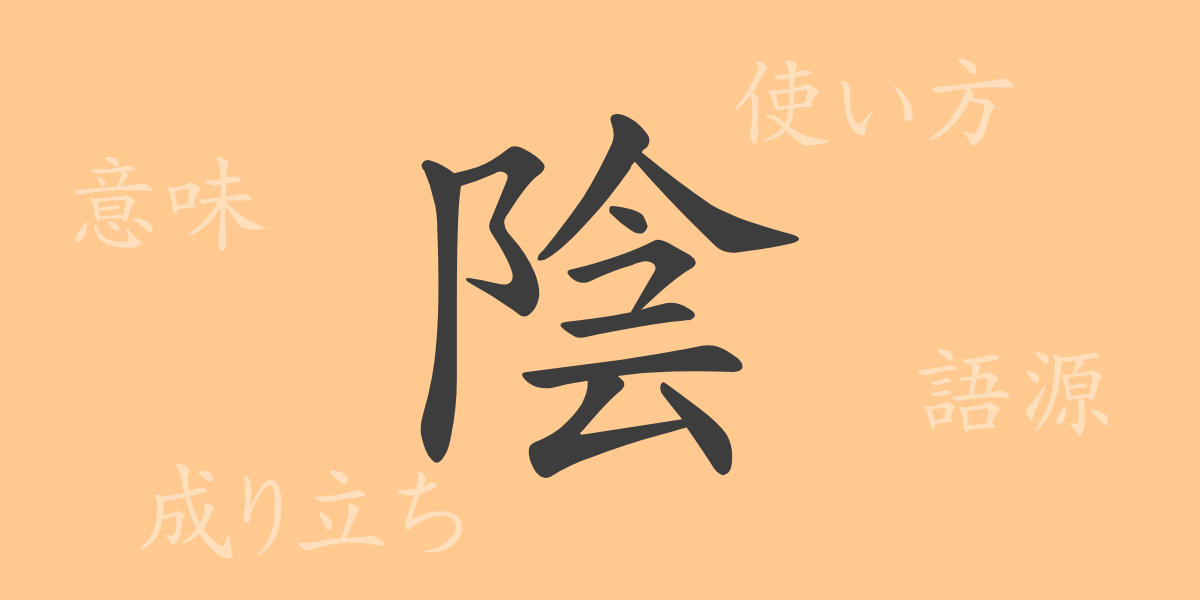
Behind the rich expressiveness of the Japanese language lies the deep meaning and history of each Kanji character. In this article, we will focus on the commonly used Kanji “”陰”” (In), exploring its etymology, modern usage, and extending to idioms and proverbs, delving into the world of this Kanji. The unique nuances of “”陰”” (In) are key to deepening our understanding of Japanese culture.
Origins of 陰 (In)
The Kanji “”陰”” (In) evolved from ancient Chinese pictographs. It originally combined “”阝”” (Okahen), representing hills or landforms, with “”今”” (Kin), symbolizing clouds or rain, to depict the shade of mountains or buildings, or the way clouds conceal the sun. Over time, its meaning expanded from these natural phenomena to more abstract concepts, such as “”hidden places,”” “”the reverse side,”” or “”concealed aspects.””
Meaning and Usage of 陰 (In)
“”陰”” (In) is a Kanji that represents aspects that cannot be directly seen, or the underlying parts of matters. Paired with its antonym “”陽”” (You), it forms the word “”陰陽”” (Inyou), which denotes the dual nature of things, including the characteristics of male and female. It is also used in expressions like “”陰気”” (Inki), meaning gloominess, or “”陰影”” (Inei), referring to hidden expressions or feelings.
Readings, Number of Strokes, and Radical of 陰 (In)
The Kanji “”陰”” (In) contains a wealth of information in both its form and meaning.
- Readings: Onyomi (Chinese reading) is “”In”” , and Kunyomi (Japanese reading) is “”Kage”” .
- Number of Strokes: A total of 11 strokes.
- Radical: 阜 (Okahen) or 阝 (Kozatohen).
Idioms, Phrases, and Proverbs Using 陰 (In) and Their Meanings
Idioms, phrases, and proverbs that include “”陰”” (In) reflect the sensibilities and thoughts of the Japanese people. For example, “”陰徳”” (Intoku) signifies good deeds done without seeking a reward, while “”陰陽師”” (Onmyouji) refers to an ancient official position that divined natural phenomena and fate. Expressions like “”陰の功”” (Kagenokou) or “”陰で支える”” are used to praise unseen help or support.
Summary of 陰 (In)
The Kanji “”陰”” (In) symbolizes things that are not visible, the hidden aspects. Its applications are diverse, ranging from natural events to human psychology, to social roles, and it is utilized in various contexts. Understanding this Kanji allows us to appreciate the depth of expression in the Japanese language. Let’s continue to focus on the unique charm of “”陰”” (いん) and the words that incorporate it.
“