



“
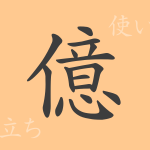
Each character written in Japanese books carries deep meaning and history. The common kanji character “”憶”” (Oku) is no exception. In this article, we will delve into the allure of the kanji “”憶”” (Oku). Let’s explore the rich world this character possesses, from its etymology to its meaning, usage, and even idioms and phrases.
The Origin (Etymology) of 憶 (Oku)
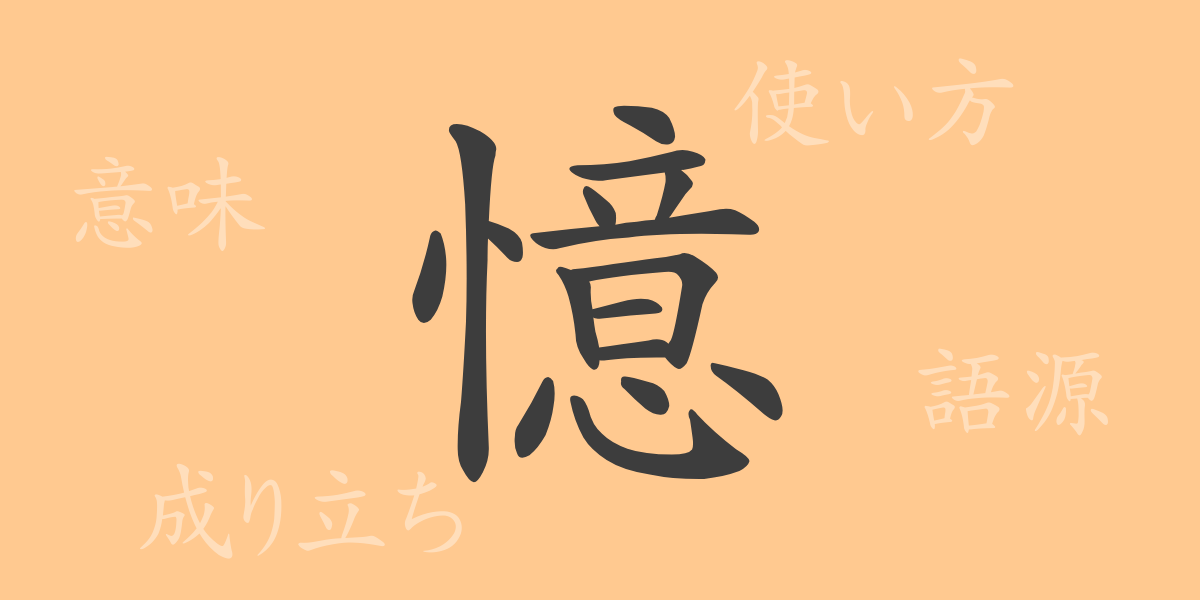
The kanji “”憶”” (Oku) consists of a combination of “”忄”” (Risshinben), representing the heart or mind, and “”意”” (I). “”意”” (I) represents sound, while “”忄”” (Risshinben) indicates the movement of the heart. In other words, “”憶”” (Oku) holds the meaning of “”a sound deeply engraved in the heart”” and has been used as a kanji meaning memory or remembrance.
The Meaning and Usage of 憶 (Oku)
“”憶”” (Oku) has the meaning of “”to remember”” or “”to recall.”” This kanji is primarily used in words and expressions related to memory. For example, “”記憶”” (Kioku) refers to keeping past events in one’s mind, while “”感憶”” (Kanoku) means to retain feelings in one’s heart. As a kanji involved in personal inner mental activities, “”憶”” (Oku) is used in many situations.
Reading, Stroke Count, and Radical of 憶 (Oku)
The kanji “”憶”” (Oku) has the following characteristics:
- Reading: The on’yomi is “”おく”” (Oku), and there is no specific kun’yomi.
- Stroke Count: A total of 16 strokes.
- Radical: The radical is “”忄”” (Risshinben), the horizontal version of the heart radical.
Idioms, Phrases, and Proverbs Using 憶 (Oku) and Their Meanings
There are numerous idioms, phrases, and proverbs containing “”憶”” (Oku), each telling the richness of the Japanese language. For example, “”追憶”” (Tsuioku) means to nostalgically remember the past, while “”回憶”” (Kaioku) refers to recalling past events in one’s mind. Additionally, “”記憶喪失”” (Kioku sōshitsu) signifies losing one’s memory of the past and is also used in medical contexts. “”憶測”” (Okusoku) means to speculate without certainty and is a commonly used word in daily life.
Summary of 憶 (Oku)
In this article, we explored the kanji “”憶”” (Oku), from its origin to its meaning, usage, and idioms. “”憶”” (Oku) is not merely a character but a kanji that holds a profound meaning symbolizing our memories and emotions. When using words containing “”憶”” (Oku) in daily communication, try to recall the history and meaning behind them. By doing so, you may feel the power of language even more deeply.
“